Topic · 5 articles
CAD file formats and data exchange
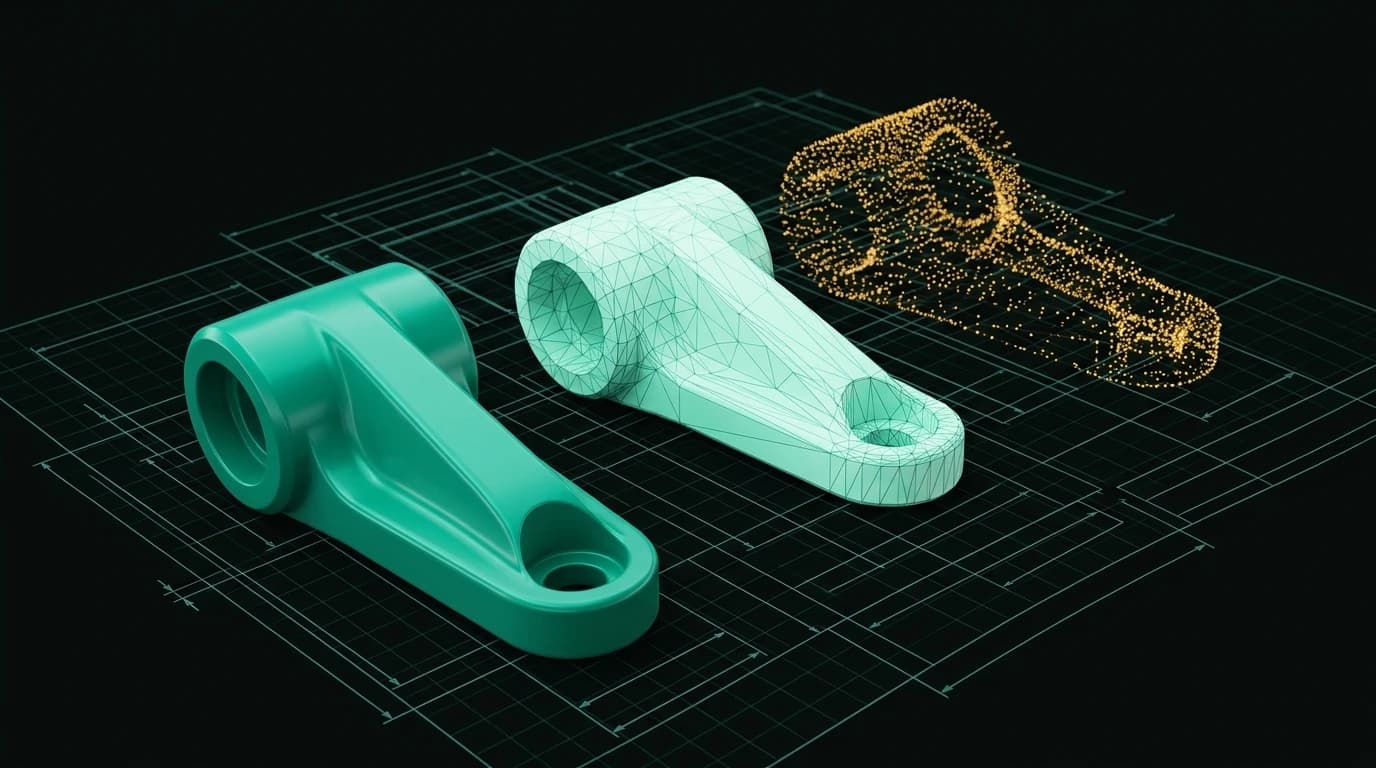
Most CAD handoff problems come from one distinction: whether a file carries exact boundary-representation geometry or an approximation made of triangles. These guides work through what each format preserves, where information silently disappears, and why converting a mesh back into a solid is reverse engineering rather than a format conversion.
- Start here
What Is a STEP File? An Engineer's Guide (AP203, AP214, AP242)
STEP (ISO 10303) explained for mechanical engineers: what it stores, when to use it, and how it differs from mesh formats.
B-Rep vs. Mesh: Why Editable Geometry Actually Matters
The practical difference between boundary representation (B-Rep) solids and triangle meshes — and why the distinction determines whether a generated model can be edited, toleranced, or machined at all.
How to Generate a STEP File from Text
Write a clear mechanical prompt, preview the solid, check dimensions, then export STEP — plus the mistakes that produce a wrong first draft.
STEP vs STL: Which File Do You Actually Need?
STL is great for meshes and some 3D printing. STEP is what you want for editable mechanical CAD and most machining — here's how to decide, with the specific cases that trip people up.
Text-to-CAD vs Text-to-3D (Mesh): Why It Matters
AI 3D mesh tools look impressive in renders. Mechanical work needs editable B-Rep solids — here's the practical difference, how to tell which one you actually have, and what happens when you pick wrong.